

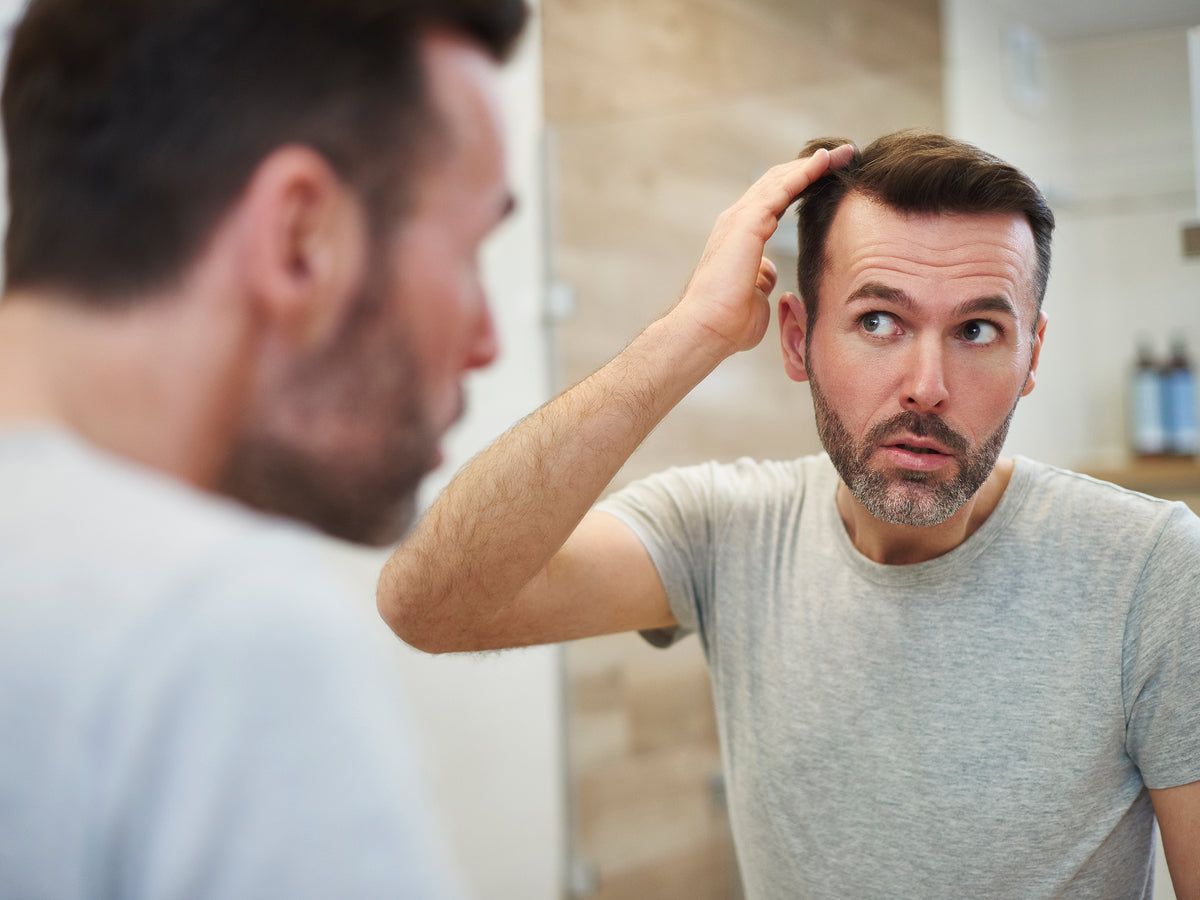
Understanding Hair Loss at the Follicle Level
Androgenetic alopecia (AGA)—commonly known as male or female pattern hair loss—is the most common cause of thinning hair. It occurs when genetically susceptible hair follicles become sensitive to dihydrotestosterone (DHT), a hormone derived from testosterone. Importantly, DHT is present in everyone, but only individuals with a genetic predisposition experience its hair-thinning effects.
What Is Hair Miniaturization?
Hair loss in AGA is not sudden—it’s a gradual transformation of the follicle known as miniaturization: The hair growth phase (anagen) becomes shorter. The follicle shrinks over time. Each new strand grows back thinner, shorter, and lighter. These finer hairs resemble “peach fuzz” (vellus-like hairs) and progressively replace thicker terminal hairs, leading to visible thinning.
Can Miniaturized Hair Be Reversed?

In many cases—especially early on—yes. Miniaturized follicles are often still alive but underperforming. With the right stimulation and environment, they can produce thicker, more robust hair again.

From Miniaturized to Terminal Hair
With consistent treatment over time, Miniaturized hairs may become thicker and more pigmented. Growth cycles can extend and normalize. Hair density and overall appearance can improve. Laser therapy does not create new follicles, but it can help revitalize existing follicles that are still capable of producing hair.
Why Early Treatment Matters
AGA is progressive. The longer follicles remain miniaturized, the more difficult it becomes to restore them. Starting treatment early helps:
- Preserve existing hair
- Support weakened follicles before they become inactive
- Improve the likelihood of regaining thicker, terminal hairs

Early Thinning
Best time to act

Visible Loss
Still reversible

Advanced Loss
Much harder to restore
The Bottom Line
Hair loss from AGA is driven by genetics and follicle sensitivity—not just hormone levels alone. The visible thinning you see is the result of miniaturization, a gradual weakening of the hair follicle. Laser therapy offers a non-invasive, drug-free approach to support follicle health—helping miniaturized hairs regain thickness and strength over time.
References
- Hamblin MR. Mechanisms and applications of the anti-inflammatory effects of photobiomodulation. AIMS Biophysics. 2017;4(3):337–361.
- Avci P, Gupta GK, Clark J, et al. Low-level laser (light) therapy (LLLT) for treatment of hair loss. Lasers Surg Med. 2014;46(2):144–151.
- Jimenez JJ, Wikramanayake TC, Bergfeld W, et al. Efficacy and safety of low-level laser therapy for androgenetic alopecia. Am J Clin Dermatol. 2014;15(2):115–127.
Share:
Crosshatch Laser Coverage vs. Concentrated Energy
Not All "Diodes" Are Lasers: What Every Red Light Therapy Buyer Should Know